
While many companies still think of 3D printing primarily as a fast way to make a one-off prototype, i3D MFG focuses on production parts rather than quick-turn prototype orders or online upload-and-quote services.
That difference requires the right mindset from the start. We’ve found that, for customers considering metal additive manufacturing for production parts, the process works best when you collaborate with us early and design specifically for additive manufacturing.
Overcoming Misconceptions: Why Material Choice Matters During Development
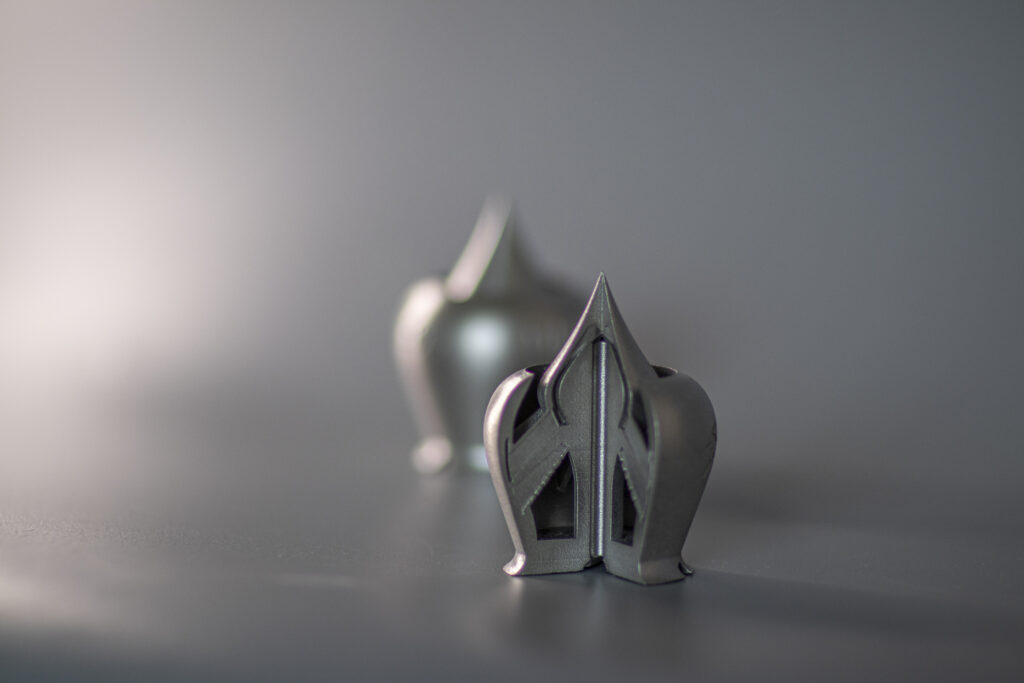
When customers reach out about potential projects, we sometimes hear a misconception that a part can be prototyped and proven through plastic 3D printing, then transferred directly into metal additive manufacturing for production in titanium, Inconel, or another final material.
The truth is, this approach won’t set you up for success. Plastic and metal additive manufacturing follow different rules. A plastic model may be helpful for testing basic form or fit, but the manufacturing process itself will need to change significantly because the materials behave so differently.
Success in metal additive manufacturing depends on a variety of factors like thermal conditions, energy input, melt pool behavior, orientation, and more. Geometry that prints easily in plastic may require different supports in metal, for instance. Parts intended for metal 3D printing should be evaluated for material and production requirements as early as possible.
Less Expensive Metals Aren’t Substitutes, Either
Some customers may understand why they can’t transition from plastic prototypes into metal, but still consider using a less expensive metal as a cost-saving measure in the prototype stage before moving into a final production material later. For example, they may plan for titanium 3D printing during production, but want to prove the design in aluminum during prototyping.
A similar challenge applies here: different metals behave differently during 3D printing processes like direct metal laser sintering (DMLS). Instead, the best mindset for success in 3D printing is to design from the start around your ultimate goal: use design for additive manufacturing (DFAM) principles to keep costs down, and, when possible, prototype your part in the material you plan to use for production.
Define Production Requirements Early in Development
One of the first questions we ask is about estimated annual usage. Because we specialize in production, we want to both understand the expected production volume and begin to plan.
To be clear, a production opportunity does not always mean thousands of parts per year. For some aerospace, defense, or space applications, a production run may be only a few highly complex, high-value parts. In other cases, annual usage may be in the hundreds, thousands, or more. Understanding those production goals early allows us to recommend the right development and manufacturing strategy.
Using First Articles to Refine the Process
Instead of thinking in terms of prototypes, we often talk with customers about first articles and second articles. Once a part is moving toward production, those early builds are the right time to inspect the results and make necessary refinements.
It’s an ideal time to refine the process through adjustments to part orientation, support strategies, tolerances, or other manufacturing variables. The goal is to develop a repeatable production process with these inspections, rather than start from scratch on a standalone prototype.
A Manufacturing Partner for Greater Success
Production metal additive manufacturing requires more than sending a file and waiting for a part to arrive. i3D MFG is ready to help you analyze your part and find the best path to production. The process involves close collaboration, but that mindset is essential for the best results.
If you are looking for production-scale metal additive manufacturing, contact i3D MFG today to discuss your next production part.