
Metal additive manufacturing gives engineers more flexibility to rethink how a part is designed, and how that can change or improve its functionality. One opportunity we often discuss with customers is part consolidation and how multiple components can be combined into a single part.
Our engineers at i3D MFG frequently collaborate with customers on part consolidation, looking for places where fewer parts could lead to easier assembly and a better-performing design.
The Benefits of Combining Parts With 3D Printing
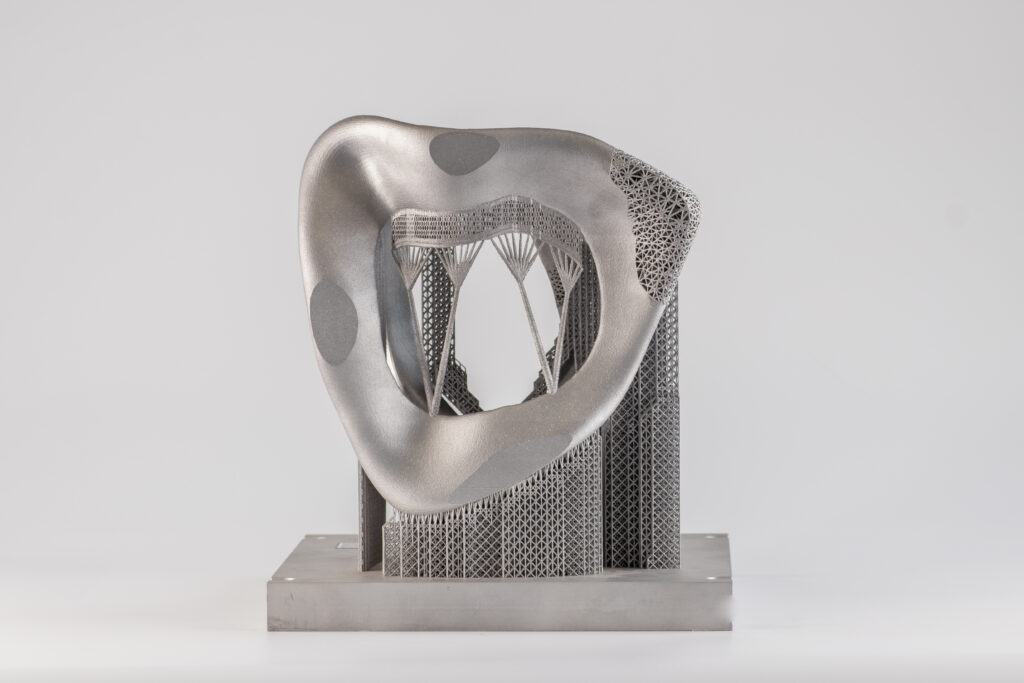
The constraints of conventional machining often force engineers to design around multiple pieces that will be machined and later assembled. Metal additive manufacturing can often combine two or more of those parts into one.
Consolidation can offer several different benefits; most obviously, it will typically reduce assembly labor. But by eliminating weld lines and associated heat-affected zones, structural continuity can be improved, and potential failure locations are reduced.
Fewer components can also mean fewer POs and parts to manage. When an assembly depends on parts from several suppliers, combining them may reduce the coordination needed to get a finished product into service.
But getting these benefits usually means designing for additive from the start. Rather than simply reproducing existing components as one part, our engineers consider whether a different design could accomplish the same task more efficiently.
Case Study: Redesigning a Quick-Release Mechanism
One recent example is a helpful illustration of what this approach can accomplish.
A customer approached us about a legacy quick-release mechanism, wondering if it would be a good fit for 3D printing. The original design required multiple machined components and external fasteners, as well as a separate coil spring.
Using Design for Additive Manufacturing (DfAM) principles, our engineering team collaborated with the customer to combine the assembly into a single printed part. And one design innovation was particularly surprising to them: Instead of installing a standalone spring, we incorporated a functional spring directly into the printed geometry.
The mechanism was printed fully assembled, eliminating another part that would require sourcing and assembly. This example shows why additive manufacturing involves rethinking design and going beyond simply changing a manufacturing process.
Which Assemblies Are Good Candidates?
When customers bring us a family of parts, our engineers look for opportunities to combine them. Not every assembly should become a single part, but several characteristics can make a design worth reviewing:
- Multiple components primarily exist because they were designed around machining access or assembly requirements.
- Fasteners and joints add labor or create potential performance problems.
- Sourcing and coordinating several parts complicates production.
We also consider whether components need to remain separate. For instance, we may not recommend consolidation for a part that must be replaced regularly or a feature that requires frequent maintenance.
Let’s Discuss Part Consolidation
A consolidated design still needs to be practical to manufacture and use. Our engineers will review your design to consider printing constraints as well as performance benefits. We’ll help you decide whether consolidation offers a meaningful advantage.
If you have an assembly that is difficult to manufacture or time-consuming to put together, i3D MFG can help evaluate the possibility of consolidation. Share your drawings and application requirements with our engineering team to discuss part consolidation and request a quote.